Can Something Good Come from the Worst Thing That's Happened to You?
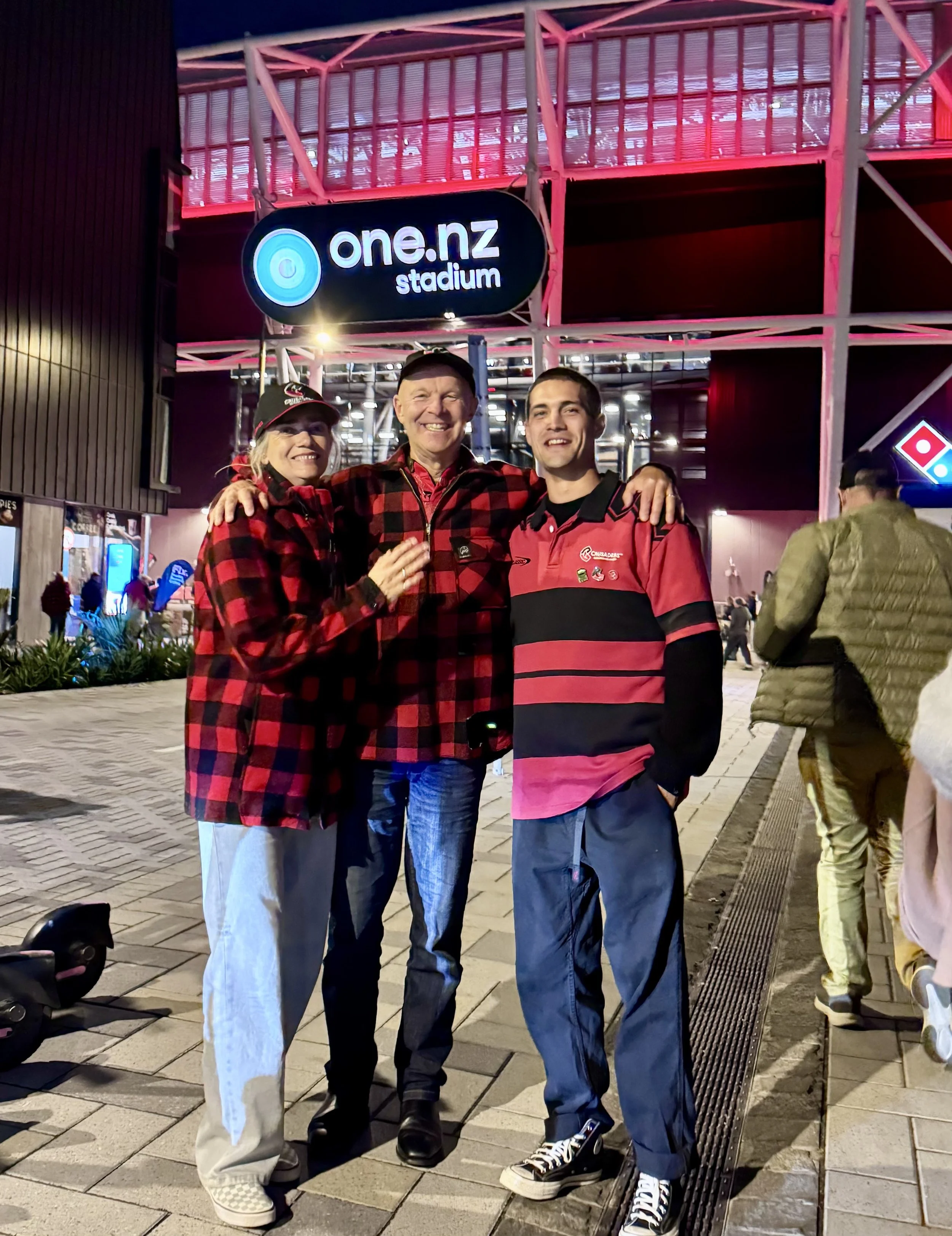
It’s been a big weekend in our house.
First, it was Abi's birthday on Friday - she should have been 24. Then, with much excitement and after years of anticipation, we went to the opening of our beautiful, brand-new Te Kaha stadium that night. A tumultuous day with many mixed emotions.
These big days always make me reflect - to think back on all that we had, all that we've lost, and all that we are lucky enough to have still.
It also made me reflect upon the significant post-traumatic growth our adopted home town has experienced since the series of earthquakes in 2010 to 2012 caused so much devastation: hundreds of lives lost, most of the city shaken to the ground.
It’s not just the city that looks different, we are different.
It's taken us fifteen years to rebuild, but this weekend we got to showcase our incredible, purpose-built, safe, solid, vibrant city to the world, demonstrating how utterly transformed it is. But it's not just the buildings that have changed. Having worked with many government organisations, schools, not-for-profits and community groups over the past 15 years, I've had the privilege of witnessing both community-wide and individual post-traumatic growth.
Post-traumatic growth is much less spoken of than post-traumatic stress.
If you're thinking post-traumatic what?! you are not alone. When I ask audiences at my keynotes if they've heard of post-traumatic stress, every hand in the room goes up. We've all heard of the terrors, the nightmares, the long-term dysfunction that trauma can cause. However, when I ask if they've heard of post-traumatic growth, only a smattering of hands are raised. Which is interesting, because of the two, the latter is actually far more common than the former. Population studies demonstrate that, on average (outside of the military) eight per cent of people experience PTS, while 60% report PTG.
So, what does this mean for you?
As someone told me (as it happens, at the opening rugby match in the new stadium, while I was waiting to order food), knowing that it is possible to grow in the aftermath of stressful life events "was a game changer." She heard me say this once in a podcast interview and wanted to thank me for "giving me a lifeline when I needed it most."
That’s not to say that trauma is good.
I'm not saying trauma is good, what you wanted, or that it obliterates all the pain you feel. Nor that growth is a replacement for what you have lost. Of course I'd have Abi back and willingly jettison the growth I've experienced in the aftermath of her loss - in a heartbeat, no contest.
What I am saying is this: science shows that in the struggle to come to terms with the major BFTs (Bloody F*cking Things) of our lives, we learn so much about ourselves and others that we gain new insights. Research consistently reports that people can grow in five different ways:
1. Recognise Personal Strength
People often say, "I am so much stronger than I ever could have imagined." Residents who had never organised anything in their lives became community leaders overnight, coordinating food drops, welfare checks, liquefaction-clearing gangs. Ordinary people found they were capable of extraordinary things.
2. Deepen Relationships With Others.
People often find a new appreciation of the importance of relationships, strengthening their support networks and valuing them more. After the quakes, Christchurch became famous for neighbours who had barely spoken looking out for one another in ways that outlasted the emergency. We dug out homes, students armed with shovels volunteered to help strangers, and farmers showed up in their tractors to do whatever was needed.
3. Develop New Possibilities.
Trauma closes one door and, unexpectedly, opens another. For many Cantabrians, the destruction of the old city made space for new ventures, new careers, new ways of living. The famous Gap Filler projects, the container mall on Cashel Street, the Botanic Gardens turning into an outdoor theatre - none of these would have existed without the rubble that preceded them. I worked with schools in a world first project uniting every single secondary school in Christchurch as they came together to learn about wellbeing science so they could support their communites. This was community collaboration the likes of which we’d never seen before.
4. Increase Appreciation of Life.
The small things stop being small. Many people I've spoken with over the years describe a profound shift in what they notice and what they're grateful for: a morning coffee, a child's laugh, an afternoon with a friend, a sunny day at the beach. On the walk to Te Kaha on Friday night, I watched people around me hug, cry and nod at one another in a gesture of appreciation - acknowleding the particular joy of people who knew exactly what it cost to get here.
5. Engage in Spiritual or Existential Change.
This doesn't necessarily mean religion - though for some it does. It means a reckoning with the bigger existential questions: what matters, what doesn't, how we want to spend our time, and with whom. Christchurch as a community has grappled with this collectively; so do individuals in the aftermath of loss.
Post-Traumatic Growth Isn't Quick - But It Is Possible.
Fifteen years is a long time. Te Kaha didn't appear overnight, and neither does growth - in a city or in a person. The rebuild required enormous effort and resources, frustrating setbacks, false starts, and the willingness to keep going anyway. Personal growth after trauma works in much the same way.
You don't have to be rebuilding from an earthquake to recognise this process. Whatever your BFT - a bereavement, a diagnosis, a relationship ending, a career collapsing - the research suggests that struggle and growth are not opposites. In fact, more often than not, they travel together.
None of this makes the struggle easier. But it does, as my new friend in the food queue reminded me, make it feel like something other than completely pointless.
What have your tough times taught you?
What have you learned?
How have you changed?
How do you think and act differently now - because of what you’ve lived through?
If you found this blog useful, feel free to share it with others.
Other blogs that might resonate include:
- Fifteen Years On: What Years of Earthquakes Taught Me
Learn more about the online course, Stronger Than You Think, here. It’s all about discovering and using your strengths in good times and in bad.