When resilience isn't enough: how to cope when the bad things keep coming
Over the past year I've spent a lot of time working with rural communities - running talks, facilitating workshops, sitting with people over cups of tea in community halls. Again and again, some version of the same question finds its way to me.
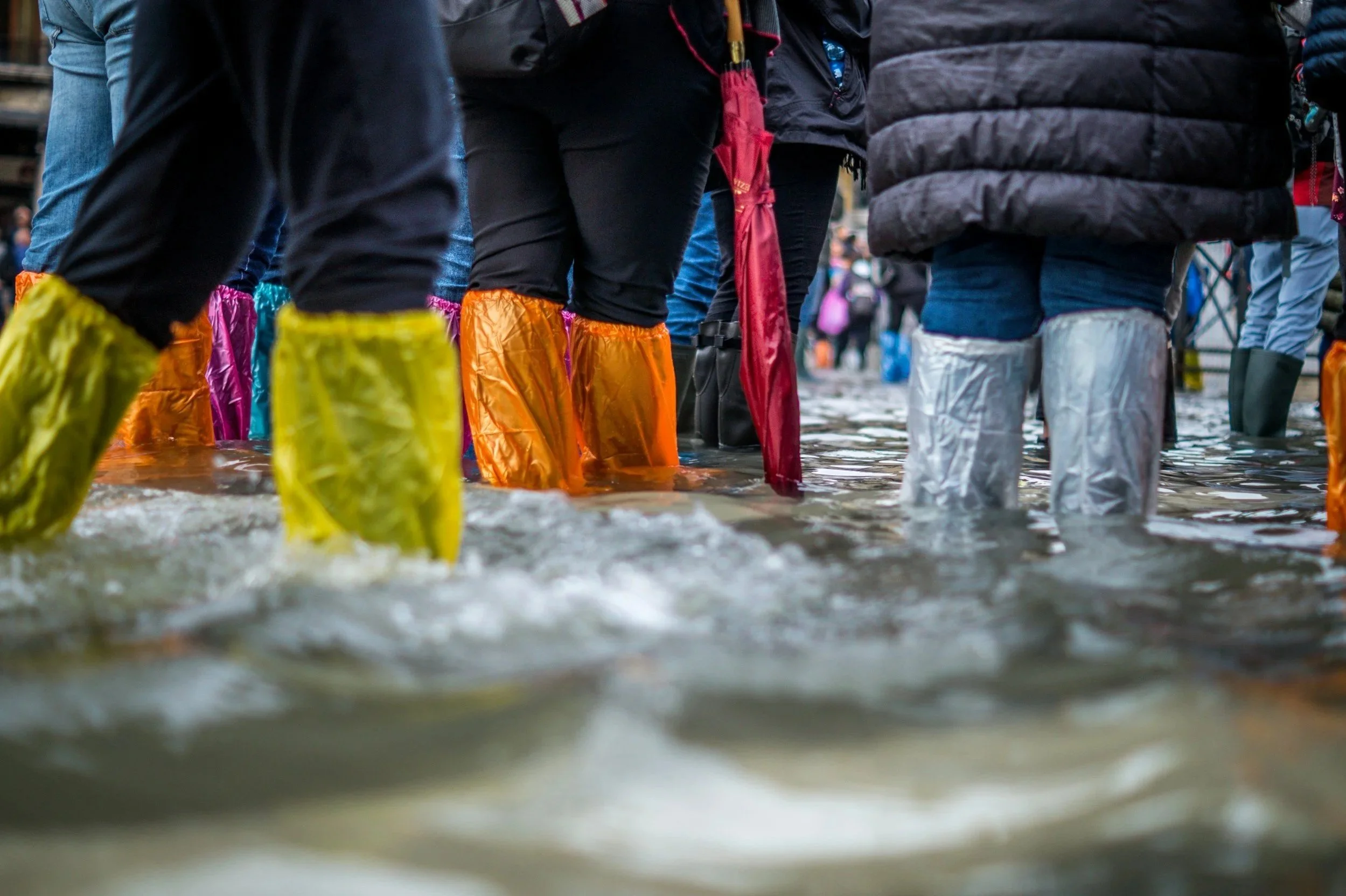
“How many times do you have to be knocked down and be expected to get back up again?”
Maybe last summer brought drought, then flooding, then hail - each one taking out a different crop in a different way. A disease outbreak has swept through livestock. Major infrastructure costs simply can't be deferred any longer. More weather events ruining harvests.
Each of these, on its own, would make for a hard year. Together, they've compounded into something that's hollowed out not just income, but confidence, energy, hope and identity.
When the question comes what worries me most is the apologetic tone that underpins it. As though the person asking it isn't sure they're allowed to ask, that perhaps even questioning is a sign of weakness.
It's not just farming of course
That question is being asked - quietly, privately, often alone - in a lot of places right now. By fishermen watching quotas shrink and coastal ecosystems shift in ways that aren't coming back. By the people who have built their livelihoods around oil and gas, facing the slow-motion reality that the industry their careers, towns, and identities are built on is in structural decline. By those living with chronic illness, by their carers too, by anyone whose difficult situation isn't a single event that happened once, but an ongoing relentless struggle they live inside.
What they all share is that the usual arc of resilience - crisis, response, recovery - doesn't apply. There is no recovery phase; challenges keep on coming and the hard thing isn’t likely to go away.
“Compounding adversity” requires a different approach
As I’ve described often here, we are well-wired for a single acute crisis. Our stress response systems evolved for it: a sharp threat, a surge of energy and focus, and then, over time we adapt and recover - we find a new normal. What those systems were not designed for is an unrelenting sequence of losses with no let-up, no opportunity to regroup and recoup in between.
Compounding adversity requires a different approach.
What actually helps
When you're knocked down again before you've fully stood up from the last event, being told to ‘stay positive’, ‘count your blessings’, ‘you’re so strong’ or ‘everything happens for a reason’ rarely helps. If this is you, you’re quite entitled to think, well f#ck that.
Instead, here’s what you can do. Dare, I say, here’s what you MUST do.
Stop asking what's wrong with me. Feeling overwhelmed, exhausted, hopeless and helpless after years of compounding loss is understandable. It is a proportionate response to an objectively hard and long-lasting situation. Understand that you didn’t cause it, and don’t make it about you - dedicating mental energy rehashing losses you couldn't have prevented adds suffering without adding anything useful. Many people faced with compounding adversity were born into it. The fact that it’s happening on your watch isn’t your fault.
Separate what you can control from what you can't. When so much is genuinely outside your hands (weather, markets, policy, illness), it’s time to get ruthless with your attention. Find the one thing you can act on, or influence, however small, and focus on that. That’s energy better spent. And notice what you have managed to do, where you have prevailed. Keep a running list and cross things out as you go so you have discernible proof that you are managing to do something.
Let people in. Maybe the hardest thing for you is accepting that you might need help. The fact that you haven’t needed it before, or asked for it yet, doesn’t mean you don’t need it now. Protracted and recurring events are much hard when faced alone. Time to be brave, put your biggest undies on, and MAKE yourself open up to someone about how hard it is. No, it won’t solve all your problems, it won’t take the nightmare away, but it will make you less likely to drown in it.
Extend yourself the same compassion you'd offer anyone else. This is the most underrated and the most difficult. Self-compassion can get a bad rap - people seem to think it’s fluffy, indulgent, for wimps. It’s not. The science is clear on this - when you’re going through tough times you need you in your corner. Beating yourself up - vicious inner-sledging - will only make things worse. So cut yourself some slack, lower the bar, and ask yourself, ‘would I speak to a friend like this?’ Would you say that stuff that’s going round in your head out loud in front of someone else? Try that, and then imagine what they’d say in return.
Compassion is one of the most protective factors we have. Not toughness. Not optimism. Compassion, and this time it’s for yourself. Research consistently shows that a nasty inner critic likely leads to anxiety, procrastination, depression, helplessness, shame and damages relationships.
Instead of saying “this is all my fault”… Try some of these: “this is beyond me, I didn’t cause it, it’s not my fault that it happened on my watch, I just happen to be the poor bugger without a chair when the music finally stopped”.
This is not giving up. This is not about you. It's not because you're weak or not tough enough. Circumstances have outstripped your human capacity to cope. I'd argue that asking for help and being a bit kinder to yourself are the bravest and most pragmatic things a person can do when the hits just keep on coming.
Explore the choices you do have.
Underneath how many times can you get knocked down lives another question that often goes unspoken: at what point is it okay to consider doing something different?
When do you leave a place that keeps flooding? Transition out of an industry that's dying? Step back from caring in a way that's unsustainable? Put your loved one in a home. End that relationship? These are not failures - they're moments of realistic reckoning.
We rarely ask the 'should I stay or should I go' question out loud, because the identity wrapped around staying and enduring is so powerful. Glorified even. If you think that's resilience, you've got the concept wrong. Resilience is your ability to choose your best response to unwanted events - it involves behavioural and mental agility - not flogging yourself until nothing remains.
You have choices. They might not be the ones you want, but they do exist. And don't tell me you don't: there is always an alternative direction to explore, only it's harder to see when you're trapped in chronic stress. You'll do better considering your options beyond the confines of your exhausted head.
Your status quo might still be the right answer. But there is no right or wrong here: only the best, or least bad, response to what you're facing. Ruminating over endless 'what ifs' and 'should haves' is exhausting, toxic and ultimately futile. Better to grieve what's been lost, acknowledge the life you imagined is no longer viable, and turn with some acceptance (and compassion) toward the life that remains.
Your exhaustion makes sense. You are not failing to cope. You are responding, quite normally, to something that has been relentlessly hard. Probably for years. Living in misery isn't really living.
Don't lose what you have to what you have lost.
More blogs you might find interesting: