Why a Sudden Shock Can Leave You Shaken for Days
When a Sudden Accident Shakes the System
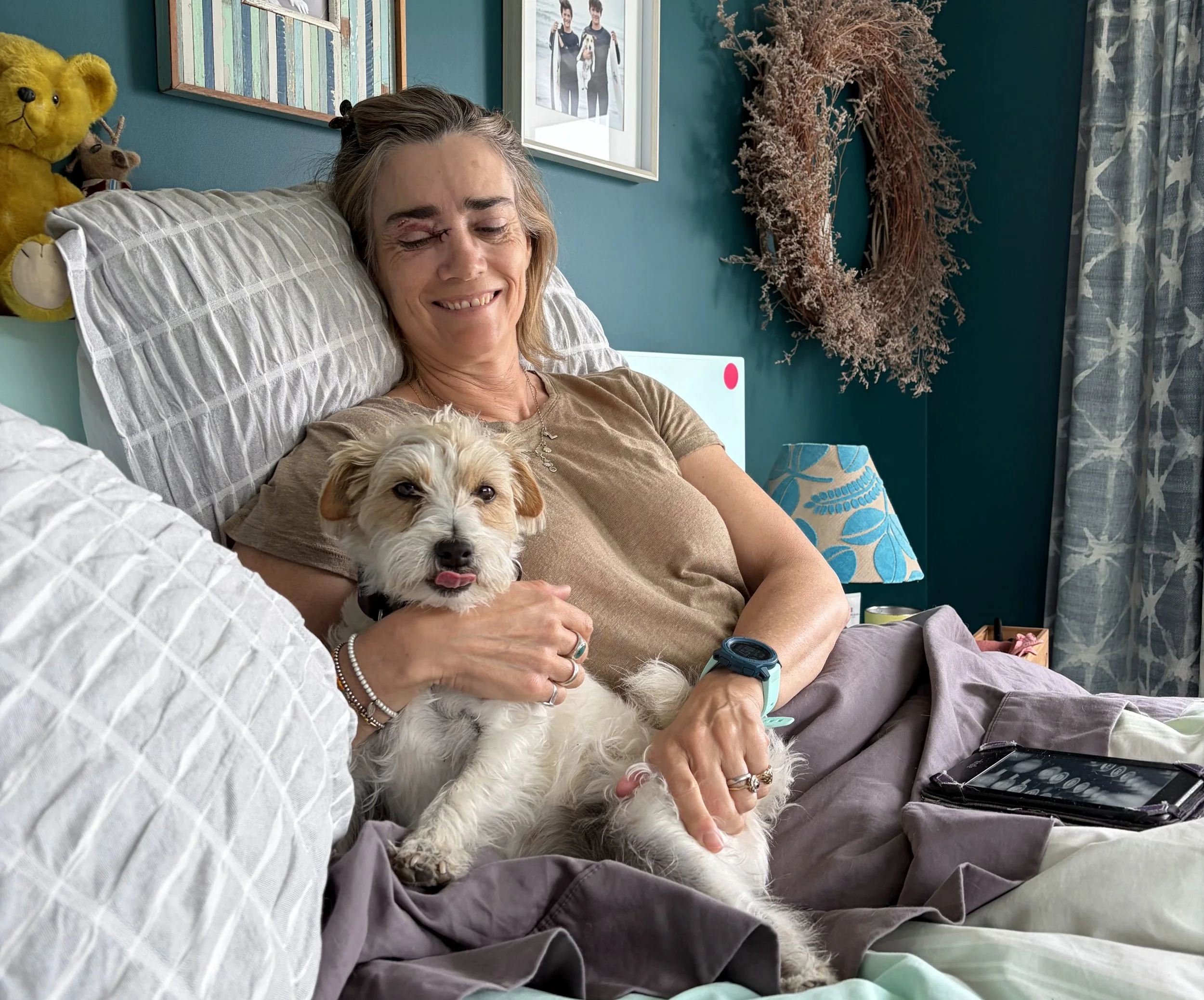
Last Friday night a freak gust of wind blew a large sun umbrella across my friend’s garden. Completely out of nowhere, the steel pole slammed into my face, cutting my eye socket in two places and leaving me bruised, puffy and shocked. It looked dramatic - there’s lots of blood in head injuries - and a Friday evening spent in the local AfterHours Surgery followed, but the physical injury turned out to be the least significant part of the experience.
The Threat Response Arrives Fast, and Leaves Slowly
I was truly grateful for the way my body went into immediate shock, numbing the pain and making me feel brave at the time. And I expected to feel wiped out the next day, but I was surprised by how long the side-effects lasted. I knew this theoretically, of course – it’s all there in the pages of my new book, and living through the Christchurch earthquakes and other losses has taught me to anticipate and respect the after-effects of trauma. But, because this was such a relatively minor injury - happening in the tranquility of my friend’s back garden, a one-off freak accident, with no likely reoccurrence and no malice involved - I wasn’t prepared for days of feeling jumpy, weepy, tired and unlike myself.
Why the Nervous System Can’t Tell Big from Small
Our nervous system doesn’t distinguish between “big” and “small”, between physical threat and emotional upheaval, between intentional harm or purely accidental freak occurrences. It simply responds to perceived danger because our brain’s primary purpose is to keep us safe. When the body senses risk, it floods us with cortisol and adrenaline, heightens vigilance, and narrows all of our resources to focus only on what is absolutely essential for our survival. That response is protective, but it is also exhausting.
While I knew that the threat had passed (surely no other flying umbrellas were likely to come my way this week) all my brain registered was that something sudden and unexpected had hit it with a metal pole. I assumed I would get on with business as usual by Monday, but my brain had another agenda entirely. Sleep more, it urged. Don’t hang out with strangers (they pose a threat), get somewhere safe (stay in your bed, don’t go outside where you are vulnerable to further attack). I found myself shying away from daylight, which suddenly felt too bright, too much, too exposing.
So it was fortunate timing to be in the studio recording my audiobook while my nervous system was still recalibrating.
Reading My Own Words While Living the After-Effects
As I recorded the audiobook for How Will I Ever Get Through This?, I found myself reading aloud passages that explained exactly what I was living through. One section in particular stood out:
“The sheer weight of shock can make it impossible to imagine getting through the next hour, let alone the next week. Many people experience post-traumatic stress symptoms — jumpiness, fear, disrupted sleep, exhaustion — but these usually subside within days or weeks.”
How Will I Ever Get Through This? (Allen & Unwin, 2026)
Feeling Vulnerable Around Others After Shock
Our bodies react first and think later. The threat-response system is ancient and fast; it can’t distinguish between a sabre-toothed tiger and a sun umbrella flying at your face. So even when the danger has passed, your body stays on high alert for a while, trying to protect you.
Being away from home added another layer: I felt vulnerable and exposed, especially finding myself in a professional environment working with strangers. Walking around looking like you’ve been punched in the face is a rare kind of oddity, let me tell you. I didn’t have the energy to retell the story over and over, but the curious looks made me feel even more self-conscious. It reminded me how often we judge what we see without understanding what’s occurring inside someone else’s body.
Finding Safety, Rest and Recovery Again
The recording studio - quiet, dark, and sound-proofed - became the perfect place to recover. The kindness of the sound engineer, Reece, and being cocooned away allowed my nervous system to settle. Monday I was definitely rattled, but as each day passed I felt more settled and, as I write this, end of play Wednesday, I feel like myself again. Just establishing a simple routine helped too: Uber to the studio, read in the safety of the room all day, Uber home, sleep, eat, sleep, repeat…. All of it a good reminder that biology needs time, routines and reassurance, not uncertainty, unfamiliarity and pressure.
If This Has Happened to You, You’re Not Weak
So if you’ve ever had a shock - physical or emotional - and wondered why you felt weepy, drained, jumpy or unlike yourself for days, weeks or even months afterwards, please know: that’s not weakness. That’s your nervous system doing its job. A bloody good job of it too! And with kindness, routines, rest, safety, and gentleness, it settles once it knows you are safe again. Do what you can to establish a semblance of routine (however basic) and lean into your Islands of Certainty - the people, places, practices and possessions that add predictability and reassurance to your world - telling your frazzled nervous systems the time for threat is over. And the truth is: it does pass. Given time and the right conditions, your body and mind will know how to find their way back.
If this resonated, you might also like:
Why We Cry (and Why That’s Not a Bad Thing) – on the emotional release that helps us process pain, loss, and change
How Will I Ever Get Through This? – my practical guide to navigating life’s toughest times